Whiskey is one of the world’s most popular drinks, especially in Ireland. But did you know that water plays a big role in how whiskey is made?
Water is used in nearly every step of the distillation process, from cleaning the grains to giving whiskey its final flavour and strength. In this blog, we’ll explore the importance of water in whiskey.
Table of Contents
Where Does the Water Come From?
Whiskey makers, also called distillers, get their water from different sources. These include:
- Natural springs
- Rivers and lakes
- Private wells
Each type of water has its own mineral content. This can affect how the whiskey tastes. That’s why some distilleries are built near special water sources known for their clean and balanced water. In fact, some distilleries use different types of water for different parts of the process. No matter where it comes from, the water in whiskey should always be tested to make sure it’s safe and clean.
The Use of Water in Making Whiskey
Water is used many times during whiskey production. Let’s break it down:
1. Cleaning the Grains: Before anything else, water is used to wash the grains (like barley or corn) to remove dirt and dust. Clean grains help create a cleaner final product.
2. Mashing: Next, the grains are mixed with warm water. This step helps turn the starches into sugars, which are needed for fermentation, the process that creates alcohol.
3. Diluting: After fermentation and distillation, whiskey is very strong. Water is added to lower the alcohol content to around 40%. This makes the whiskey ready for drinking and bottling.
How Water Affects the Taste
Water isn’t just used in the production process; it can even change how whiskey tastes. This is because water contains minerals. Some minerals, like calcium and magnesium, can add pleasant flavours. But too much iron, for example, can give the whiskey a bad taste.
That’s why distilleries need to test their water regularly. It’s important to make sure the mineral levels are just right for their signature whiskey taste.
Role of Water in Bottling & Ageing
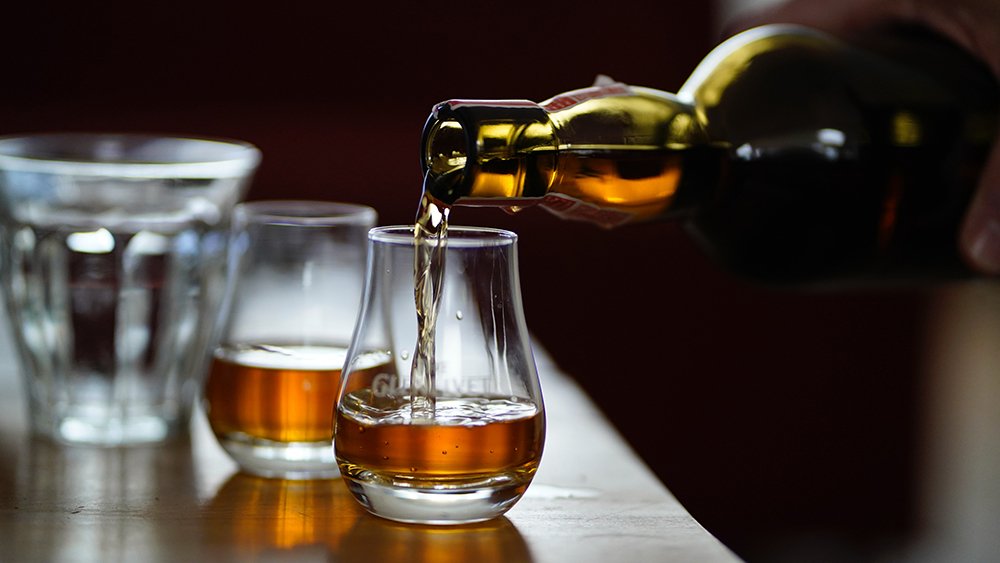
When whiskey is bottled, it usually contains around 40% alcohol. That means the other 60% is water. If the water in whiskey isn’t pure, it can change its appearance and taste. Even small amounts of impurities can make a difference.
Also, water that contains organic materials (like algae or natural waste) can interfere with how whiskey ages in the barrel. These materials can react with the whiskey over time, causing unwanted flavours. So, water that is clean and free from these compounds is best for distillers.
Fighting Whiskey Fakes with Water Testing
Sadly, whiskey counterfeiting is a growing problem. Some sellers bottle cheap, low-quality whiskey and try to pass it off as expensive, single-malt whiskey. But water can help stop this!
Each region has its own unique type of water, with specific isotopes (tiny chemical markers). As a result, scientists can test the water in whiskey to see where it really came from. If the water doesn’t match the region where the whiskey is supposed to be made, it could be a fake. This is one more reason why water testing is so important.
Types of Water Testing for Distilleries
To make sure their whiskey is high-quality, distilleries use various water tests. Here are some of the most common:
➜ Microbiological Testing – Checks for harmful bacteria and viruses that could make the water unsafe.
➜ Physical & Chemical Testing – Looks at the water’s pH (acid or base), hardness, and dissolved solids.
➜ Radiological Testing – Makes sure there are no radioactive substances in the water.
➜ Contaminant Testing – Finds harmful chemicals like heavy metals, pesticides, and other pollutants.
These tests help distillers know their water is safe, clean, and just right for making top-quality whiskey.
Conclusion: Testing the Water in Whiskey
Water is one of the most important ingredients in whiskey. From taste to clarity to authenticity, water affects every part of whiskey production. Clean, balanced water helps create the rich flavour and smooth finish that whiskey lovers expect.
At Southern Scientific, we offer expert water testing for distilleries. Our tests check everything from bacteria to minerals to ensure your water is perfect for whiskey production. Whether you’re just starting a distillery or looking to improve your product, we can help.