Ireland has 298 historic landfills, according to local authorities. Only 31 hold EPA certification. That is about 10%, almost 18 years after the rules requiring it came in. Council site investigations have linked some of these sites to elevated ammonia in nearby rivers and streams.
The figures come from a December 2025 investigation by The Journal Investigates, carried out with Investigate Europe and other European outlets. It found more than 260 historic landfills left in limbo. Some sit beside rivers, in flood zones or inside special areas of conservation. Many now look like grass fields, parks or football pitches. The waste is still underneath.
What Is a Historic Landfill?
A historic landfill, or closed landfill, is a site a local authority ran without a waste licence between 15 July 1977 and 27 March 1997. Waste licensing began in 1997. The EU Landfill Directive followed in 1999, with engineered liners and strict waste acceptance rules.
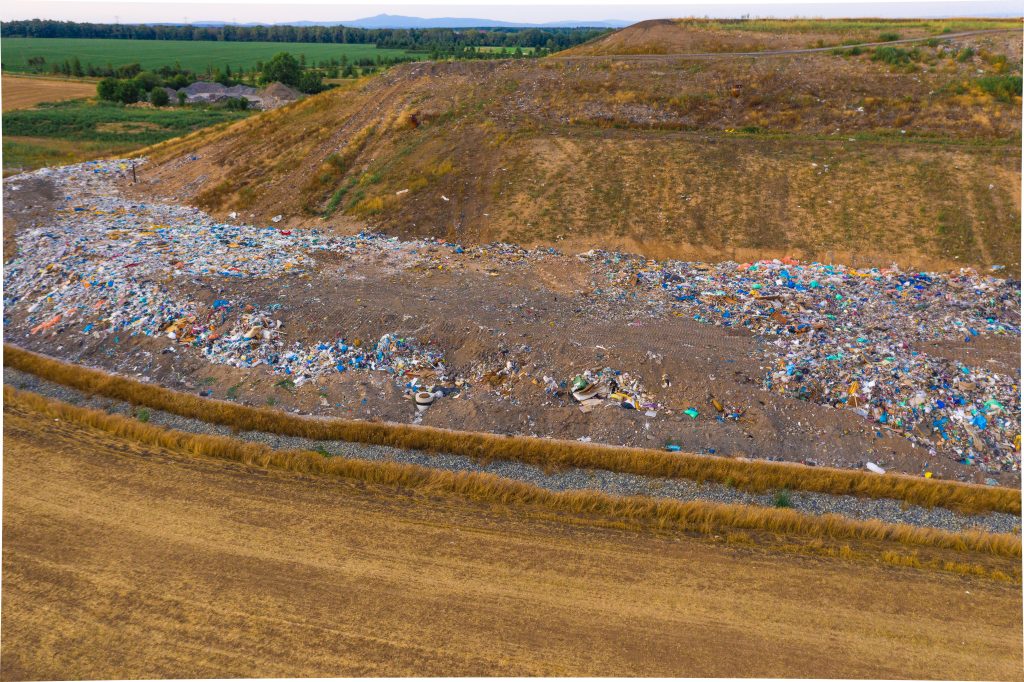
Sites from before this period had far fewer pollution controls. Many were unlined, so nothing stopped liquids reaching the ground below.
The Waste Management (Certification of Historic Unlicenced Waste Disposal and Recovery Activity) Regulations 2008 set out the process for dealing with them. Each council must:
- Identify and register every closed landfill in its area
- Carry out an environmental risk assessment in line with the EPA Code of Practice
- Apply to the EPA for a certificate of authorisation
- Complete the remedial works and controls the certificate sets
The certificate imposes these controls after the fact. Its purpose is to contain the risk of environmental damage.
Historic Landfills by the Numbers
298 historic landfills listed by local authorities. The EPA says 275 are registered.
157 are rated high or moderate risk of causing environmental damage.
31 hold EPA certification.
208 have never been submitted to the EPA. A further 57 applications are pending.
87 high or moderate risk sites have never been submitted for certification.
18 applications have waited more than five years. 14 of those have waited more than ten.
The EPA has issued 944 extension notifications to councils across the 57 pending applications.
Historic landfills exist in every county. Carlow, Leitrim and Offaly have not submitted any sites to the EPA. Nine other councils have not applied for or certified more than 75% of their sites. Laois is the only council to have applied for all of its sites, but none had been granted at the time of the investigation.
What Leaks From Historic Landfills
Leachate forms when rainwater seeps through buried waste. It picks up harmful chemicals and contaminants as it moves. Once it escapes the site, landfill leachate can reach groundwater, streams and rivers.
Decomposing waste also produces landfill gas, a mix of methane and carbon dioxide. Both carry environmental and health risks.
Ammonia is a key warning sign. An academic at DCU’s School of Biotechnology told The Journal that elevated ammonia points to ongoing breakdown and biological activity inside the waste. Excess ammonia can:
- Harm fish
- Disrupt aquatic ecosystems
- Threaten drinking water sources
Irish rules set a low threshold. Under the European Union Environmental Objectives (Surface Waters) Regulations, a river at good status must average no more than 0.065 mg/l total ammonia (as N).
The same academic said these sites may hold materials now banned from manufacturing, such as some electrical components and plastics. Those materials are still reaching the environment and waterways. Experts also warned that old waste may release persistent chemicals.
Dumped waste carries similar risks today. Read our guide to what illegal dumping leaves behind in your soil.
Where Pollution Has Been Found
Council site investigations have linked several historic landfills to nearby water pollution:
Gort, Co. Galway: A 2021 site investigation identified the landfill as a potential pollution source for the Gort River. Dumped waste sits metres from the river and a popular walking trail. The council applied in 2021 and waited over three years for a draft certificate, which will require remedial works.
Clountreem, near Castletownbere, West Cork: A 2009 report found the landfill was the point source of pollution in the Clountreem Stream.
Dunmanway, Co. Cork: The landfill is affecting adjacent surface water.
Remediation Progress in 2026
Some sites are moving forward. In March 2026, Tipperary County Council appointed a contractor for a €3.5 million remediation of the Carrownreddy historic landfill in Tipperary Town. The site took household and commercial waste from the 1940s until around 1990.
The Department of Climate, Energy and the Environment is funding the work in full. The works aim to:
- Stop rainwater entering the waste
- Cut the risk of landfill leachate reaching groundwater
- Control landfill gas emissions
In January 2026, South Dublin County Council confirmed the EPA has certified its Waterstown landfill. It was finalising an application for its second site, Friarstown.
Government funding for landfill remediation now stands at €205.5 million across councils and the EPA. In 2025, €18 million supported almost 120 projects in risk assessment, regularisation and remediation.
How Historic Landfills Are Assessed
The EPA’s Code of Practice on environmental risk assessment for unregulated waste disposal sites sets a tiered approach:
- Tier 1: A desk study and site inspection build a conceptual site model. This maps the links between the waste (source), the route contamination could take (pathway) and what it could harm (receptor). Each site receives a risk rating.
- Tier 2: Moderate and high risk sites move to site investigation. This covers waste characterisation, surface water and groundwater sampling, and landfill gas monitoring.
- Tier 3: Where needed, a quantitative risk assessment models the risk in detail.
Each tier depends on accurate data. Gaps in that data can lead to EPA requests for more information, which the EPA cites as a common cause of delay.
Europe’s Hidden Landfill Legacy
Ireland is not alone. There may be up to 500,000 landfills across Europe. Around 90% predate modern EU pollution laws.
Most locations are unknown. Data is inconsistent and many sites have been covered over. Using freedom of information requests and public data, the cross-border investigation located more than 60,000 sites. Many are likely to hold industrial, commercial, domestic and hazardous waste, as well as liquid sludge.
If You Live or Farm Near a Historic Landfill
Check your area. The National Waste Collection Permit Office keeps a national list of historic landfill sites. Your local authority’s environment section can also advise.
Test your well. If a private well sits near or downhill from a closed landfill, get a drinking water test.
Report signs of pollution. Unusual odours, discoloured water or dead fish should go to your local authority.
Protect Water and Land With Accredited Monitoring
At Southern Scientific, we help local authorities, consultants and landowners move from reactive crisis management to proactive protection. Our INAB-accredited, ISO 17025 certified laboratories test surface water, groundwater and waste for the contaminants old landfills release.
Our organics in water test screens surface water, groundwater and drinking water for VOCs (volatile organic compounds) and SVOCs (semi-volatile organic compounds). The suite also covers hydrocarbons, solvents and PAHs (polyaromatic hydrocarbons). Old mixed waste can release these compounds into nearby water.
Our consultancy team prepares environmental risk assessments and designs environmental monitoring programmes for sites under regulatory review. Reliable data from the start gives the EPA what it needs to assess a site.