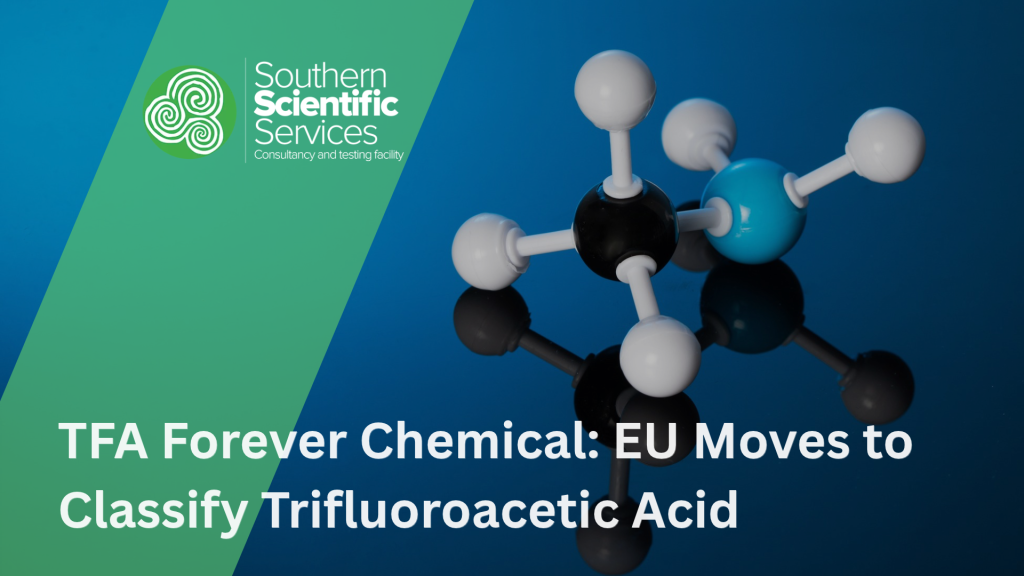
The EU’s chemicals agency wants trifluoroacetic acid (TFA) classified as toxic to reproduction. Trifluoroacetic acid is a “forever chemical” found in rain, rivers, groundwater and tap water across Europe. On 6 October 2026, the European Chemicals Agency (ECHA) published its scientific committee’s final opinion and sent it to the European Commission.
The move puts TFA at the centre of Europe’s PFAS debate. For water suppliers, farmers and manufacturers, knowing your TFA levels now matters more than before.
What Is Trifluoroacetic Acid (TFA)?
Trifluoroacetic acid (TFA) is an ultra-short-chain PFAS. Its molecule has two carbon atoms. Under the OECD definition, that makes it part of the PFAS family of “forever chemicals”.
TFA does not break down in the environment. It dissolves in water and moves through soil with ease. Researchers have detected it in rainwater, soils, plants, plant-based foods, drinking water and human blood serum. A 2024 study in Environmental Science & Technology found TFA concentrations are orders of magnitude higher than those of other PFAS.
TFA enters the environment from several sources:
- PFAS pesticides. EFSA has identified TFA as a breakdown product of several active substances, including flufenacet, flutolanil and saflufenacil.
- Fluorinated refrigerant gases (F-gases). Gases such as HFO-1234yf break down in the atmosphere to form TFA, which then falls in rain.
- Pharmaceuticals and industrial chemicals. The chemical and pharmaceutical sectors use TFA as a solvent and catalyst.
- Direct industrial releases of manufactured TFA.
What ECHA Has Recommended
ECHA’s Committee for Risk Assessment (RAC) adopted its opinion in June 2026. It followed a 2025 proposal from German authorities. ECHA published the final opinion on 6 October and passed it to the Commission.
RAC recommends that TFA, sodium trifluoroacetate and other inorganic salts of TFA be classified as:
- Toxic to reproduction, Category 1B, for harm to development. In plain terms, it may damage the unborn child.
- Toxic to reproduction, Category 2, for effects on sexual function and fertility.
- Persistent, mobile and toxic (PMT).
- Very persistent and very mobile (vPvM).
TFA already carries an EU classification as harmful to aquatic life with long-lasting effects. The European Commission will now decide whether to adopt the new classifications under the CLP Regulation. If it does, they will be added to the EU’s harmonised classification list.
Why the Classification Matters for Water
TFA is common in European drinking water. In 2024, Pesticide Action Network (PAN) Europe tested tap water from 11 EU countries. It found TFA in 34 of 36 samples.
There is no EU legal limit specific to TFA in drinking water. Some countries have set their own guidance values. The Netherlands uses an indicative limit of 2.2 µg/L.
The reproductive toxicity finding could change that. Under EU pesticide law, a pesticide metabolite that qualifies as toxic to reproduction counts as a “relevant metabolite”. Relevant metabolites must not exceed 0.1 µg/L in groundwater. The Commission concluded in 2025 that TFA is a toxicologically relevant metabolite of PFAS pesticides.
EurEau represents Europe’s drinking water and wastewater operators. It has warned that a 0.1 µg/L limit for TFA in drinking water would have major consequences for the sector. TFA is hard to remove with conventional water treatment.
Surface water rules are also tightening. Directive (EU) 2026/805 adds TFA to a sum of 25 PFAS with a strict standard of 0.0044 µg/L. The Commission must consider a separate standard for TFA at its next review. Ireland must transpose the directive by 21 December 2027.
Ireland’s TFA Monitoring Gap
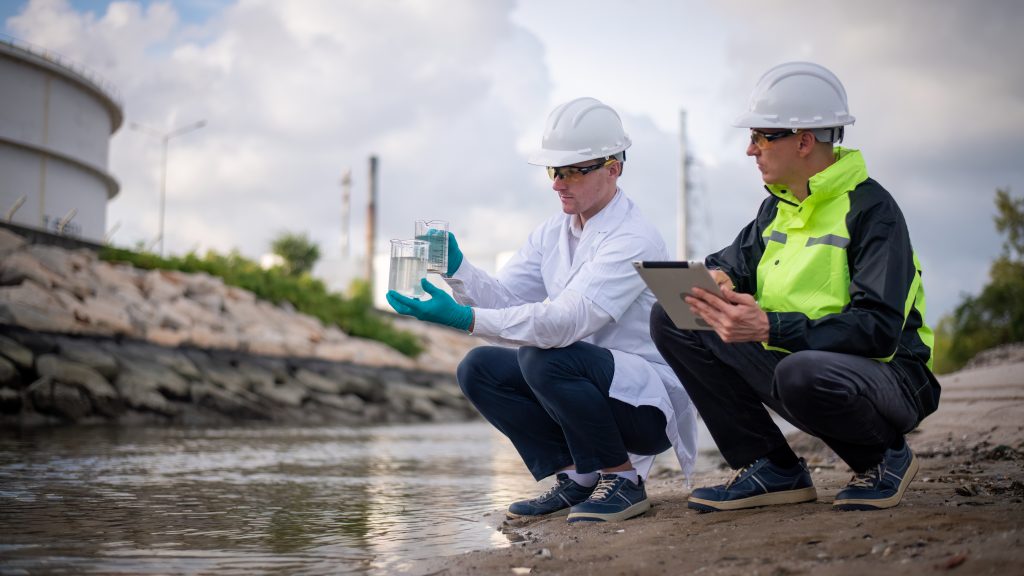
Irish water suppliers have had to monitor PFAS in drinking water since 12 January 2026, under the European Union (Drinking Water) Regulations 2023. The EU allows two measures:
- Sum of PFAS: 20 named PFAS compounds, with a limit of 0.1 µg/L.
- PFAS Total: all PFAS, with a limit of 0.5 µg/L.
TFA is not one of the 20 compounds named in the Sum of PFAS.
Friends of the Irish Environment has asked the Department of Agriculture’s Pesticide Registration and Control Division to review PFAS herbicides that break down into TFA. It has also called for TFA monitoring to begin in Irish soils, water and food.
Across Europe, the European Environment Agency reports that TFA is rising in groundwater. Every private well in Ireland draws on groundwater, and households on private supplies are responsible for their own testing.
Who Should Consider Trifluoroacetic Acid Testing?
TFA testing gives you a baseline before the rules change, not after. It matters most for:
- Group water schemes and private supply owners drawing groundwater, above all in tillage areas where PFAS herbicides may be used.
- Food and drinks producers that rely on their own groundwater or surface water supply.
- Pharmaceutical and chemical manufacturers that use TFA as a reagent or solvent and hold IE or IPC licences for discharges.
- Local authorities and consultants monitoring surface water ahead of the 2027 transposition deadline.
- Landowners and developers assessing soil and groundwater on sites with a history of pesticide or industrial use.
Get Ahead of TFA Limits With Southern Scientific
The EU has moved trifluoroacetic acid from a background chemical to a classified reproductive toxicant in waiting. Limits for water may follow. Organisations that know their TFA levels now will be ready to act when they do.
Southern Scientific’s INAB-accredited, ISO 17025 certified laboratories test soil and water for a wide range of chemical contaminants. Our PFAS testing covers PFAS in soil and water, including TFA, and supports:
- Drinking water, groundwater and surface water monitoring
- Industrial effluent and wastewater compliance for IE and IPC licensed sites
- Soil and contaminated land assessments
For pharmaceutical clients, our pharma and healthcare testing team also covers organic solvents in waste streams and API residues in wastewater.
Testing for trifluoroacetic acid now is the first step in moving from reactive crisis management to proactive protection.