Heavy metals in soil do not break down. Cadmium, lead, copper and zinc that reach a field can stay there for decades, and some move into grass, crops and livestock. Local geology sets the starting point, but farm inputs add to it. Biosolids, pig slurry and old mine workings can push individual fields towards legal limits. With sewage sludge spreading set to grow and a new EU soil law in force, knowing what is in your ground matters more than ever.
Table of Contents
What Counts as a Heavy Metal
The term covers metals and metalloids such as cadmium, lead, mercury, arsenic, chromium, nickel, copper and zinc.
Some, like copper and zinc, are essential trace elements at low levels. Livestock and crops need them. At high levels, the same elements become toxic. Others, like cadmium, lead and mercury, serve no biological purpose.
Teagasc gives these typical ranges for unpolluted agricultural soils (mg/kg):
- Cadmium: 0.1 to 1
- Lead: 2 to 80
- Mercury: 0.03 to 0.8
- Arsenic: 1 to 20
- Copper: 2 to 100
- Zinc: 10 to 200
Unlike nitrogen or phosphorus, metals do not leave the soil through crop offtake in any meaningful amount. Researchers at the University of Galway note that once metals reach the soil, they are likely to stay there. What goes on today builds on what went on before.
Where Heavy Metals in Soil Come From
Geology: Geological Survey Ireland’s Tellus programme has mapped topsoil chemistry at almost 17,000 sites across the northern half of the country. It found high arsenic over gold-bearing bedrock at Croagh Patrick, Inishowen and Clontibret, and around zinc-lead deposits such as Tynagh in Co. Galway. Shale bedrock may explain higher levels in parts of Louth, Meath and Dublin.
Mining legacy: Silvermines in Co. Tipperary is Ireland’s best-known case. Toxic dust from an old tailings pond caused a crisis in 1999. In 2017, three cows from the area died of lead toxicity, 20 local farms were sampled and three herds were restricted.
Biosolids: Treated sewage sludge carries metals from homes, roads and industry. A University of Galway study tested sludge from 16 Irish treatment plants. At one plant, lead averaged 3,696 mg/kg, against an EU upper limit of 1,200 mg/kg. It also found antimony and tin far above normal soil levels. Neither metal has a legal limit in biosolids.
Pig slurry. Teagasc reports pig slurry contains 600 to 800 mg/kg of copper in dry matter. Repeated spreading on the same fields adds up.
Phosphate fertiliser. Rock phosphate carries cadmium. Since 2022, EU fertilising product rules have capped cadmium in phosphate fertilisers at 60 mg/kg of phosphate (P₂O₅).
The Legal Limits for Heavy Metals in Soil
The Waste Management (Use of Sewage Sludge in Agriculture) Regulations 1998 require soil analysis before sludge is spread. Sludge cannot go on land where soil exceeds these limits (mg/kg dry matter, soil pH 5 to 7):
- Cadmium: 1
- Copper: 50
- Nickel: 30
- Lead: 50
- Zinc: 150
- Mercury: 1
These sit at the strict end of the EU ranges. The EU Sewage Sludge Directive allows member states to set cadmium between 1 and 3 mg/kg and lead between 50 and 300 mg/kg.
Other rules under the regulations:
- Sludge is capped at 2 tonnes of dry matter per hectare per year.
- Where soil pH stays above 7, the limits can be exceeded by up to 50%, provided this creates no hazard.
- Where sludge is used on a regular basis, soil must be re-analysed at least once every 10 years.
The EU Soil Monitoring Law
Directive (EU) 2025/2360, the EU’s first law dedicated to soil, entered into force on 16 December 2025. Member States must now monitor and assess soil health.
The law also addresses contaminated sites. Where a site poses an unacceptable risk to human health or the environment, risk reduction measures must follow. Information on these sites must be public and free of charge.
The law sets no binding targets for farmers and bans no activities. But national soil monitoring will put more data on the record, and landowners will want their own results first.
Who Should Test for Heavy Metals in Soil
Soil heavy metals testing makes sense if you:
- Receive biosolids or other sludges, or plan to
- Have spread pig slurry on the same fields for years
- Farm near old mine workings or known mineral deposits
- Are buying, leasing or converting land for horticulture or food production
- Have unexplained poor crop growth or livestock health problems
Heavy Metals in Soil Testing
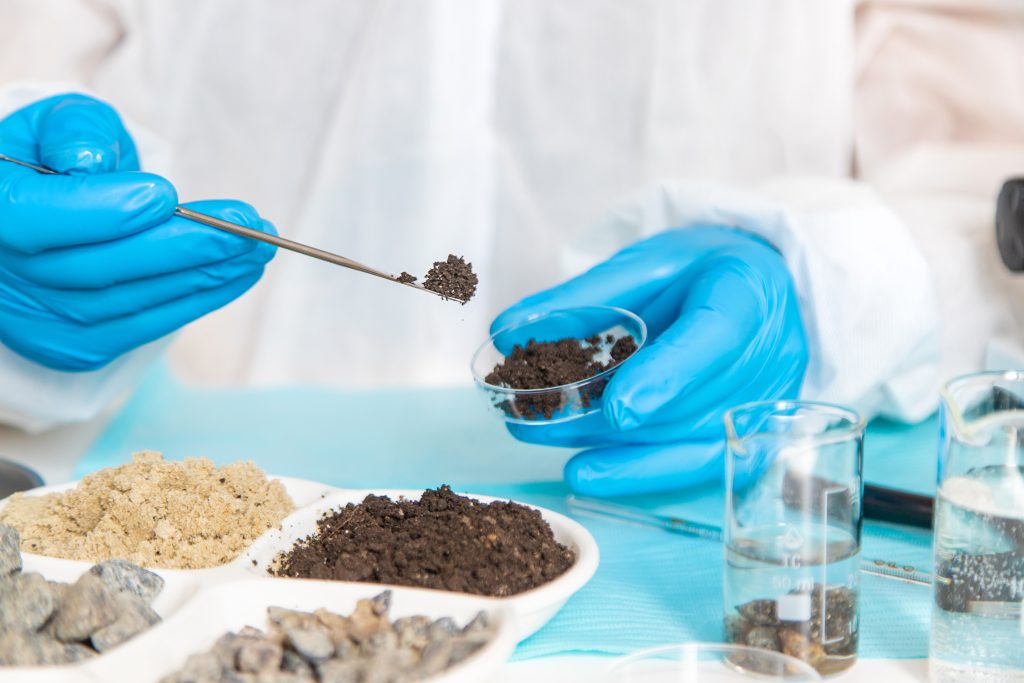
Southern Scientific is Ireland’s largest soil testing laboratory. Our agricultural soil testing range includes a dedicated heavy metals suite, and a combined suite that adds pH, lime requirement, phosphorus and potassium. Our INAB accreditation for metals in soil covers antimony, arsenic, barium, cadmium, chromium, cobalt, copper, lead, manganese, molybdenum, nickel and zinc.
Spreading biosolids, slurry or compost? Our slurry, sludge, manure and compost testing includes a seven heavy metals suite. Check what goes on the land as well as the land itself.
Moving from reactive crisis management to proactive protection means knowing the heavy metals in your soil before you add to them.